
Learning how to sell furniture online starts with one decision: rent space on someone else’s marketplace or build a store you own. Most guides blur the two. They mix tips for flipping a used couch with advice for running a real furniture brand.
This guide is for the second group. Makers, small retailers, and decor shops that want repeat customers and their own margins. I build WooCommerce themes for decor and furnishing brands, so the setup steps below come from configuring real product pages, not from theory.
How to Sell Furniture Online: Pick Your Channel
Where should a sofa listing live? The answer depends on volume and on whether you want a brand or just a sale.
Marketplaces such as Etsy, Chairish, or AptDeco bring traffic on day one. They also take a commission on every order and own the customer relationship. For one-off pieces or a quick test, that trade is fair.
Your own store flips the math. Hosting and a theme cost money up front. In return, the profit, the email list, and the reviews all stay with you. Traffic is the hard part, so plan for content and ads from the start.
| Marketplace | Your own store | |
|---|---|---|
| Traffic at launch | Built in | You build it |
| Fees | Commission per sale | Hosting, theme, payment fees |
| Customer data | Platform keeps it | You keep it |
| Branding | Limited | Full control |
| Best for | Testing, single pieces | Collections, repeat buyers |
Many sellers run both. A marketplace shop catches early buyers while the store grows. The rest of this guide covers the store side, built on WordPress and the WooCommerce plugin.
Set Up Products for Fabrics, Finishes, and Sizes
One dining chair can come in four woods, six fabrics, and two heights. Listing each combo as a separate product buries shoppers in near-duplicates.
WooCommerce solves this with variable products. Create attributes like Finish and Fabric, then generate variations. Each variation carries a separate price, SKU, stock level, and photo.
- Use global attributes. Define Finish once under Products, Attributes, then reuse it across the catalog. Shoppers can then filter the whole shop by oak or walnut.
- Attach an image to every variation. A buyer who picks green velvet expects to see green velvet.
- Add exact dimensions and weight. Width, depth, height, and seat height answer the first question every buyer asks. Weight also feeds shipping rates later.
Made-to-order pieces need one extra field: lead time. Put it in the short description, right next to the price. Hiding a six-week wait until checkout is the fastest route to a refund request.
Photos That Sell Furniture Online
Shoppers cannot sit on a chair through a screen. Photos and copy have to do the job a showroom used to do.
- Shoot five to eight angles. Front, back, side, three-quarter, and close-ups of joints, legs, and fabric texture.
- Show scale. A room scene with a person, a plant, or a lamp tells buyers more than a number in centimeters.
- Keep backgrounds consistent. Matching light and backdrops make a collection page look curated instead of random.
- Compress before upload. Large furniture images slow pages fast. Export WebP files around 1600px wide.
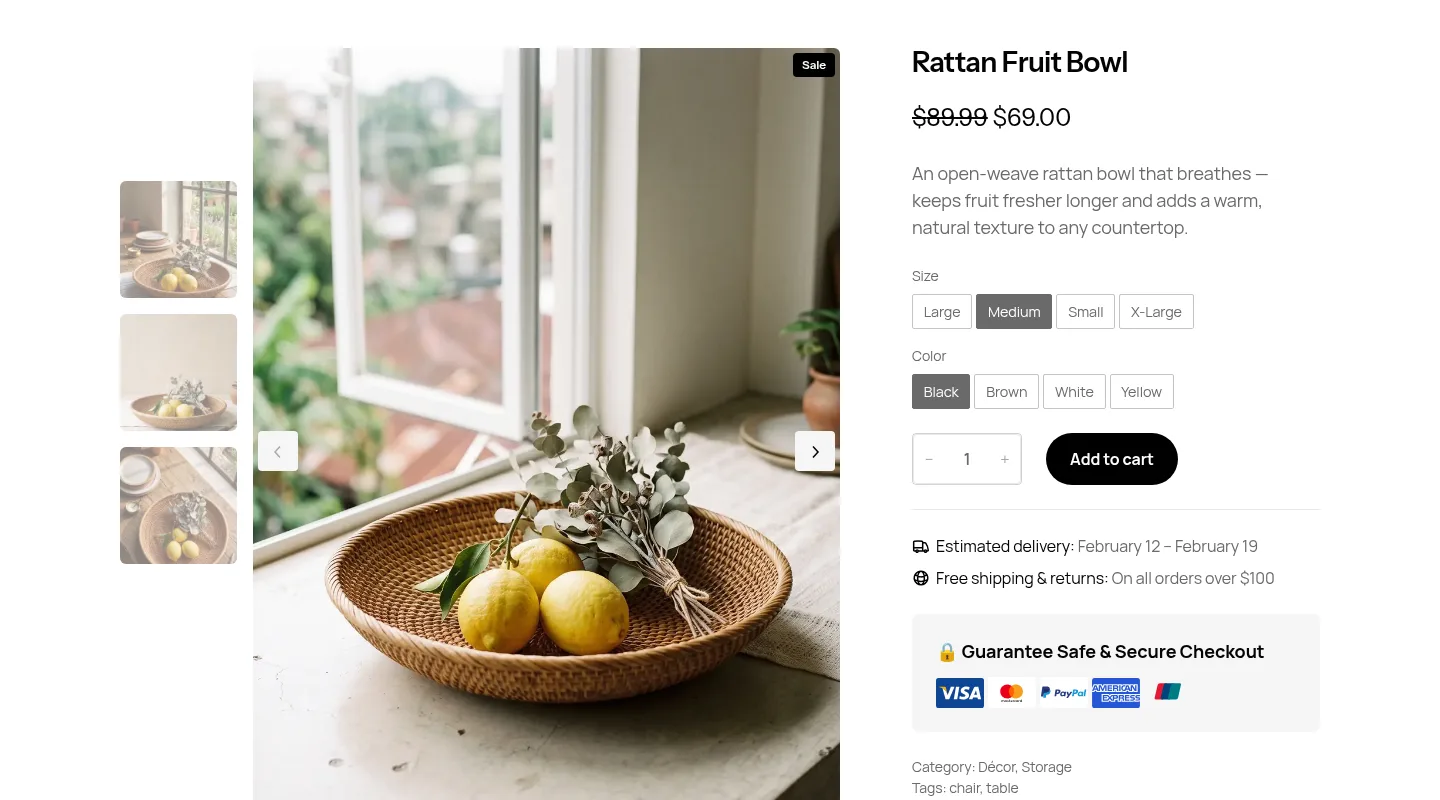
The theme decides how those photos appear. When I designed the product page in Kutchara, I gave the gallery a large main image with next and previous arrows, so shoppers can flip through angles without leaving the page. Thumbnails alone hide the detail that justifies a premium price.
Shipping Bulky Items Without Losing Money
Shipping is where most online furniture businesses lose their margin. A flat rate that works for a side table will sink you on a sectional sofa.
Group products by size with WooCommerce shipping classes. A simple setup has three tiers:
- Parcel: lamps, cushions, decor. Standard carrier rates.
- Oversized: chairs, small tables, flat-pack items. Higher fixed rate per item.
- Freight: sofas, beds, wardrobes. Quoted rate or white-glove delivery.
Get real quotes from two or three freight carriers before setting prices. Then decide whether to show shipping separately or fold it into the product price. Free delivery converts better, but only when your margin can absorb it.
Local sellers have a cheaper option. Turn on local pickup or a delivery zone limited to nearby postcodes. Many buyers happily collect a dresser to skip a freight fee.
Whatever you choose, say it everywhere. Kutchara ships with a Benefits pattern, a row of icons for shipping, returns, secure payment, and support. I placed it right under the homepage hero and again on the product page, because delivery doubts kill furniture sales before the cart.
Build Store Pages Around Rooms and Collections
Quick win: organize the catalog the way people furnish a home. Nobody searches your store for “SKU 4412”. They shop for a living room, a reading corner, or a walnut bedroom set.
- Categories by room: Living, Dining, Bedroom, Outdoor.
- Collections by style or material: Scandinavian, Mid-Century, Solid Oak.
- Attribute filters: finish, color, and price on every category page.
A mega menu helps once the catalog grows past a dozen categories. Kutchara includes a custom Dropdown Menu block for this, plus a Shop by Collection pattern for the homepage. A Tabs block keeps dimensions, materials, and care instructions tidy below the add-to-cart button instead of one long wall of text.
Before you pick any theme, compare a few. My roundup of furniture and home decor WordPress themes on Strakture covers free and premium options side by side.
Get Found: SEO for a Furniture Store Website
Here is a gap you can exploit: plenty of furniture shops copy the supplier description word for word. Google sees the same text on dozens of sites and has no reason to rank yours.
- Write unique descriptions. Cover materials, construction, comfort, and the room it suits.
- Name images properly. “walnut-dining-chair-green-velvet.webp” beats “IMG_2231.jpg”, and alt text helps image search.
- Add product structured data. WooCommerce outputs basic markup. Check it against Google’s product structured data guide so price and stock show in results.
- Collect reviews. Ask for a photo review a week after delivery. Real homes sell better than studio shots.
Launch Your Furniture Store This Month
Choose a channel, set up variable products with real dimensions, price bulky shipping honestly, and organize the shop by room. Those four steps cover most of what separates a hobby listing from a store people trust.
For a head start on design, Kutchara is the block theme I built for home and interior shops. It includes a setup wizard and demo importer, so your catalog is the only thing left to add.
How to Sell Furniture Online FAQs
What is the best place to sell furniture online?
For single used pieces, local marketplaces and consignment sites work best because they bring buyers immediately. For a brand with collections and repeat customers, an independent store usually wins long term. Profit, customer data, and branding stay in your hands. Many sellers start on a marketplace and move volume to their own site.
How do you ship large furniture to customers?
Small items ship by parcel carrier. Large pieces like sofas and beds travel by freight, or by in-home delivery crews who carry them inside. In WooCommerce, assign shipping classes by size so each tier gets its own rate. Offering local pickup can cut costs for nearby buyers.
Can I sell furniture online with WordPress?
Yes. WordPress plus WooCommerce, which costs nothing, handles variable products, shipping classes, payments, and stock. Add a theme designed for furniture or home decor and you get product layouts, collection pages, and filters that suit large catalogs. Budget for hosting and any premium extensions you pick.
How do I start an online furniture business with no experience?
Start small with ten to twenty pieces you can photograph well and ship reliably. Test demand through Etsy or a simple store, then track which items sell and what shipping really costs. Expand the catalog once you have steady orders and real margin numbers.

Leave a Reply